
Where Does Actinic Keratosis Commonly Appear on the Body?
 Sunshine is part of daily life in Texas. However, over the years, that exposure can show up as rough, scaly spots on your skin. These spots may be actinic keratoses, a common sign of long-term sun damage.
At Longhorn Dermatology in Spicewood, Texas, your skin is cared for by experienced, board-certified dermatologists. Dr. Brian Ransdell, MD, FAAD, Dr. Megan Trainor, MD, FAAD, and Dr. Quoc-Bao Nguyen, MD, FAAD, combine advanced training and hands-on experience to diagnose and treat sun-related concerns, including actinic keratosis.
What Is Actinic Keratosis?
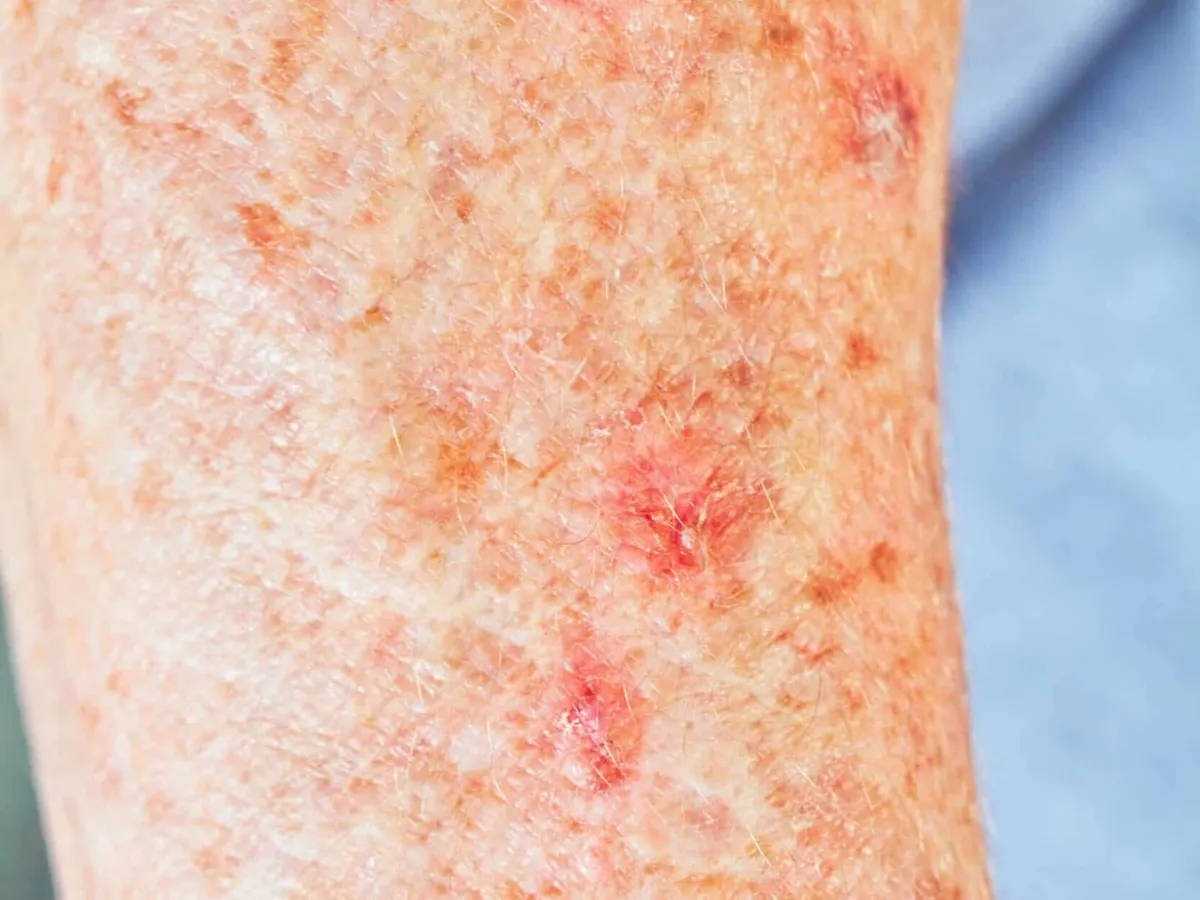
Actinic keratosis, or AK, is a common skin condition caused by long-term sun exposure. It often appears as a rough patch where the skin has been damaged by UV rays. AK is considered precancerous, but early care makes treatment straightforward and effective.
AK can vary in appearance, so it helps to know what to look for. You may notice:
- Flat or slightly raised patches on the skin
- A dry, scaly, or rough texture that feels like sandpaper
- White, yellow, red, or skin-toned areas
- Spots that may feel tender or may not cause any discomfort
Some areas may look like small pink or gray patches with a light scale, while others can become thicker and more noticeable over time. In some cases, multiple spots can cluster together in one area.
The Most Common Spots Actinic Keratosis Can Develop
Actinic keratosis is most often found on sun-exposed areas, including:
- Face: Nose, cheeks, and forehead
- Ears: A frequently missed area
- Scalp: Especially where hair is thinning
- Neck and Chest: Regularly exposed to sunlight
- Arms and Hands: Daily sun exposure builds over time
- Lips: Known as actinic cheilitis, often on the lower lip
Everyday activities like driving, walking outdoors, or spending time outside in Spicewood can lead to gradual sun damage. These changes often develop slowly, which is why they can be easy to overlook at first.
Start With a Simple Skin Check
Your skin deserves extra attention, and getting started is easy. If you notice a spot that lingers, feels rough, or starts to change, a quick visit to our office can give you clarity and peace of mind.
Call 512-961-5250 today to book your consultation at Longhorn Dermatology in Spicewood, TX.
Ask Us a Question
-
Longhorn Dermatology
4900 Bee Creek Rd., Suite 101, Spicewood, TX 78669Mon–Fri 8:00 AM – 5:00 PM · Sat–Sun Closed
Book Now at Longhorn Dermatology
The form is loading. If it does not appear, call (512) 961-5250.